Whether you run a small fleet or a large one, you need to have fuel cards. They come with many benefits and make it easier to manage the cost of fuel. But how will you know if the information you receive through receipts, bank statements, or invoices is accurate? The short answer: you need to link your fuel cards to your fleet management system.
If your fuel budget is always going overboard and you’re suspecting foul play, integrating your fuel cards with Cartrack fleet management system is the best way to find out what’s happening.
In today’s article, we go into detail on the importance of fuel card integration and how it helps your fleet become more efficient. We also show you why Cartrack should be at the top of your list when it comes to this.
Fleet fuel cards are a must-have! According to the Shell State of Fleet Cards 2025 report, 95% of the fleet managers they surveyed agree that they provide valuable insights into a fleet’s efficiency. In the same report, only 39% of those fleet managers have integrated their fleet management systems for even better fuel efficiency, meaning more fleets are missing out.
To get the most out of your fleet fuel cards, you need to have security measures in place to monitor fuel use across your fleet. That's where the integration part comes in. Fleet card integration refers to linking your fuel cards with a fleet management system to get automatic fuel transaction validations and detailed reports on your fleet’s fuel efficiency. With this, you’ll see driver habits that cause high fuel consumption and suspicious transactions that might be theft or fraud.
All you need is a fleet fuel management system and a fuel card service provider. But not all of them are the same, so to get the best out of this combination, you have to pick service providers that align with your fleet’s needs.
You can get fuel cards from various fuel station companies or banks. Each fleet fuel card has its own unique benefits. What works for you might not work for another fleet because every fleet is different, but a few things you should consider are:
Once you have the answer to all these important factors, you’ll easily figure out which fleet card offer works best for your business.
For example:
If you run a large fleet of 1 000 vans that travel across the country, you need to ensure the petrol card you choose has a network of fuel stations that’s spread across the country and along the routes your drivers normally take. You can either choose a fuel company with the most fuel stations in the areas your fleet covers, or one that works at any fuel station. As long as its security features are good, you’ll have minimal issues.
The security features of a fuel card include each card having a unique PIN code and the verification of your person by the petrol attendants. Each card should have the vehicle registration number linked, and the vehicle make and model. Before each refuel, petrol attendants should check that the vehicle description on the card matches what they see.
Once you have the ideal fleet fuel card for your business, you must get it integrated with your fleet management system. When fuel cards are linked to a fleet management system, you get more accurate reporting of your fleet’s fuel consumption habits. Not all fleet management systems can do this well, so you need to find one that works best for your fleet’s needs.
Some of the things you should look out for are:
After finding your ideal fleet fuel card, you can ask to test it out with your fleet management service to see how it works and if it’s bringing in any positive change. Within two weeks to a month, you should be able to see a notable difference.
A fuel card helps you see how much a driver spends on fuel, and it ensures your drivers aren’t stranded in the middle of a trip because of empty tanks. But it doesn’t show you where the fuel goes, which comes with the risk of drivers taking advantage of this privilege because they know you might not be able to pick up their bad habits.
Here’s what we mean:
Fuel theft is a concern for many fleets, especially those with trucks. Without fuel card integration, you’ll only have your spreadsheets, receipts, and invoices to rely on for theft and fraud detection. This type of data can be easily manipulated by thieves, making it look like your fleet always eats up more fuel than expected.
When a fleet system is linked to your fuel cards, you’ll receive telematics data like location and odometer readings. This information is then used to verify the details stated in the fuel receipts and statements.
For example, if the records show someone using the card at a fuel station in Secunda but the telematics device shows the said vehicle was actually parked at one of your depots at the time, then it means the fuel went into another vehicle, or the transaction is fake. Fleet fuel management systems flag such transactions quickly so you can take immediate action.
A fleet management system uses telematics devices to monitor distance, mileage, and driving habits. Through this, you’ll get reports that give you a better understanding of the amount of fuel each trip requires. Through these reports, you can draw up realistic estimates for your fuel budget and improve cost management.
When drivers know there’s a system in place to cross-check every transaction, they’ll behave accordingly. If there are any discrepancies or suspicious transactions, you’ll pick them up, and they know they’ll have to explain what happened. When drivers are speeding or practising any other form of fuel-inefficient driving, you’ll see it in the reports and hold them accountable for their actions.
With everything automatically recorded by the fleet system, you won’t have to do much paperwork and manual entries. This reduces the chances of errors and time-consuming administration so you can redirect your time to completing other tasks.
There are many ways in which fuel card fraud can be done. Drivers learn how the system works and somehow find loopholes. They start with testing it out, and once they notice that you haven’t picked up any discrepancies, they keep on doing it.
Here are some of the most common methods of fuel card fraud:
This is when drivers use their fuel cards to fill up their personal vehicles or jerry cans. It’s very hard to trace when you don’t have the assistance of fleet management software because all you’ll see is constant refilling on each trip. This is also why it’s important to choose a fleet fuel card partner that prints a vehicle description on each card so the attendant can verify it’s the right car before filling up the tank.
Fuel card cloning refers to when thieves copy the card details and make a fake card with the same details to use them to purchase fuel for other vehicles. Fuel card skimming is when criminals use special devices that are placed inside or on top of the pumps to collect card information and clone it. The only way to pick it up is by seeing multiple transactions in different areas your fleet doesn’t go to.
Some drivers even go to the extent of giving their fleet cards to their friends and family to help them save from having to pay for fuel out of their own pockets. In some cases, they refill people’s tanks in exchange for cash. This once again reflects frequent refilling from a specific driver. Without telematics proof, it’s not easy to catch them.
This is when drivers use the fleet cards to buy other things that are sold at the fuel stations, like food, toiletries, or any other personal items they can get depending on where else the cards can work.
In some cases, petrol attendants collude with drivers to inflate the price your company pays for fuel. For example, they’ll fill up 100 litres, but on the receipt it reflects as 150 litres. They’ll then split the cash price of the extra 50 litres between them.
At Cartrack, we have API-friendly software, which means you can integrate your card system with our fleet system for better management. To take it a step further, we’ve got a solution called 'MiFleet' which helps you manage the costs of running your fleet. One of the costs it focuses on is fuel.
Here's how it works.
With MiFleet, you’ve got two options:
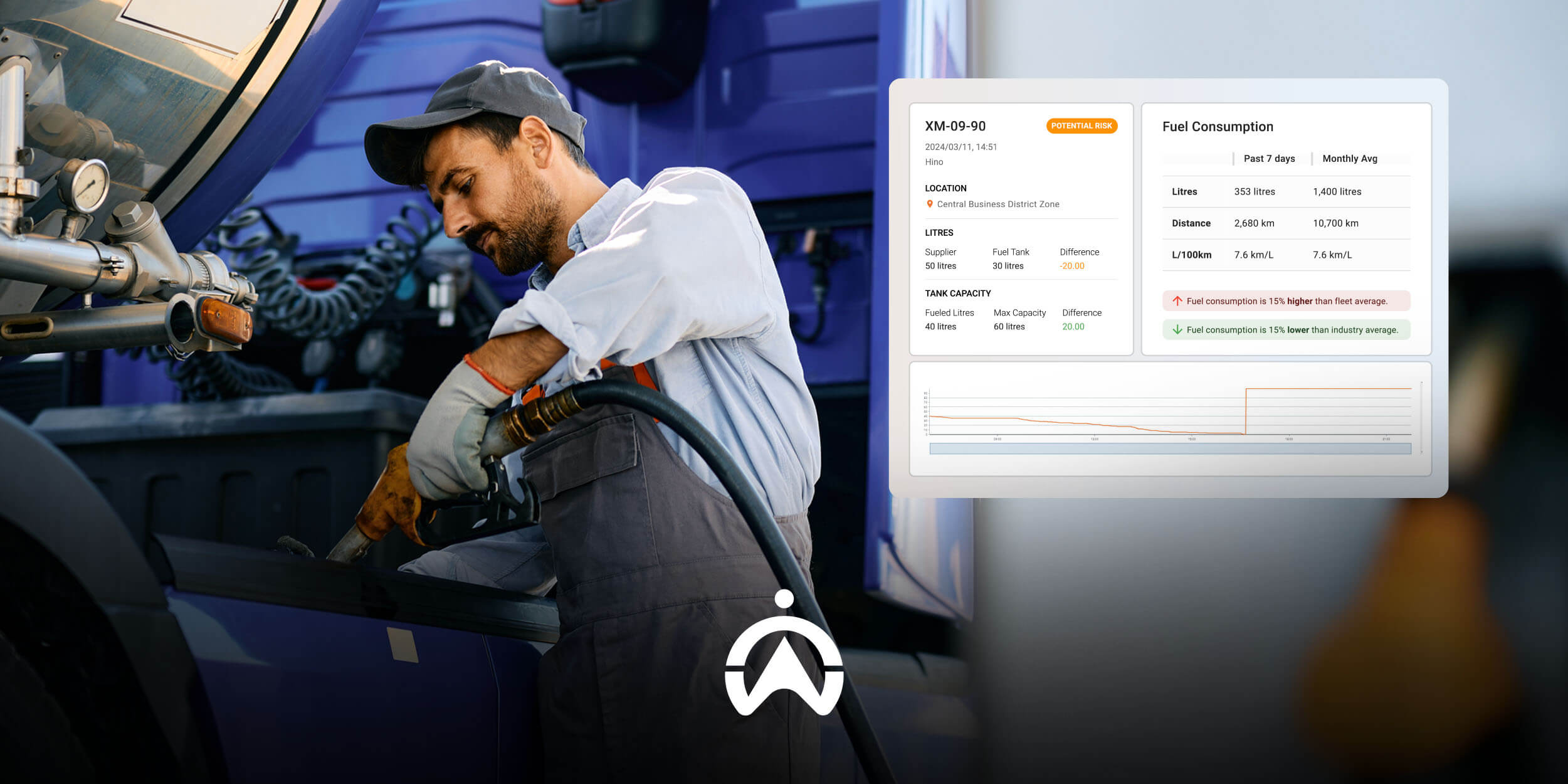
With the standard fuel validation option you have to wait till the end of the day for the driver to submit their refuelling receipts so you can load them onto the system. Once loaded, our system will read the transaction and automatically check if the data on the receipt matches what the vehicle telematics data says. It will check things like the tank litres, distance travelled, and fuel station location. If something doesn’t add up, the system will flag it as possible fraud.
On the other hand, you’ve got a mobile fuel validation option which is much faster. How it works is that after every refill, drivers must go to the Cartrack Driver App and fill in details like price and location, then take pictures of the fuel pump showing litres, the receipts, and the odometer readings. From there, they must submit the form immediately so you can receive this information in real-time.
Our system will check these transactions immediately and alert you of high-risk transactions based on telematics device data and sensors so you can attend to them immediately. It’s also important to note that for the best outcome, you install fuel level sensors in your vehicles.
With a fuel sensor, MiFleet verifies fuel transactions by checking the live fuel levels in the tank together with the cost, distance travelled, tank capacity, and location. Without a fuel sensor, MiFleet only checks tank capacity, distance (calculates kilometres per litre), location, and cost. Having a sensor gives you more details and helps spot other forms of theft such as fuel siphoning.
To further protect your fuel cards from fraud, you can:
Doing so adds an extra security layer, making it more difficult for thieves to attempt theft and fraud.
Here’s why these steps are necessary:
Having a PIN alone isn’t enough. You must have an estimate of how much each trip will cost so you can calculate the amount of fuel a driver will need per day. This works best for fleets that don’t do long-distance trips. If you run a fleet of long-haul trucks, you should rather have weekly limits.
When developing policies and procedures, make sure to include a section that states drivers must always fill the tanks to their maximum capacity. This reduces multiple transactions in a day and makes it easier to spot discrepancies.
Make sure you go through the refuelling data at least once a week so you don’t miss anything suspicious. Letting it pile up only makes it worse because you might not be able to finish checking it in one go, or you’ll get tired and miss some of the signs of fraud.
If you run a fleet for a sales company, where drivers only use the vehicle during the day to visit clients, then there surely shouldn’t be any refuelling at odd hours, such as late in the night. For this reason, you should have strict rules regarding refuelling times, and if there is a refuel after working hours, you’ll pick it up, and the driver should be able to explain what happened.
If you want a fleet card management partner you can trust, look no further than Cartrack. We run a fleet of nearly 5 000 vehicles and use the MiFleet solution on our own fleet. Over the years we’ve managed to save thousands on costs because of the insight we receive from our system.
To find out more about this service, you can fill out this form and a fleet consultant will contact you shortly.

Learn more about fuel card integration and find out how it helps you identify fraudulent transactions and reduce your fleet’s fuel expenses.