As with any business, sticking to the budget matters in fleet management. However, achieving this is no simple task because there’s a lot that could go wrong. Many fleet managers complain about the rising cost of fuel, vehicle repairs, and insurance.
Knowing exactly what’s draining your fleet budget is the first step to finding the perfect solution to help you bring down costs. To paint a picture of what business experts are experiencing, we conducted an internal survey asking some of our fleet service agents what our clients complain about most when seeking our solutions.
We asked 12 of our fleet consultants several questions about the challenges that fleet coordinators and managers experience on a daily basis and their impact on business operations. Survey results revealed some expected findings, like fuel consumption being the biggest concern; however, some of these issues often go unnoticed until there’s a major financial loss.
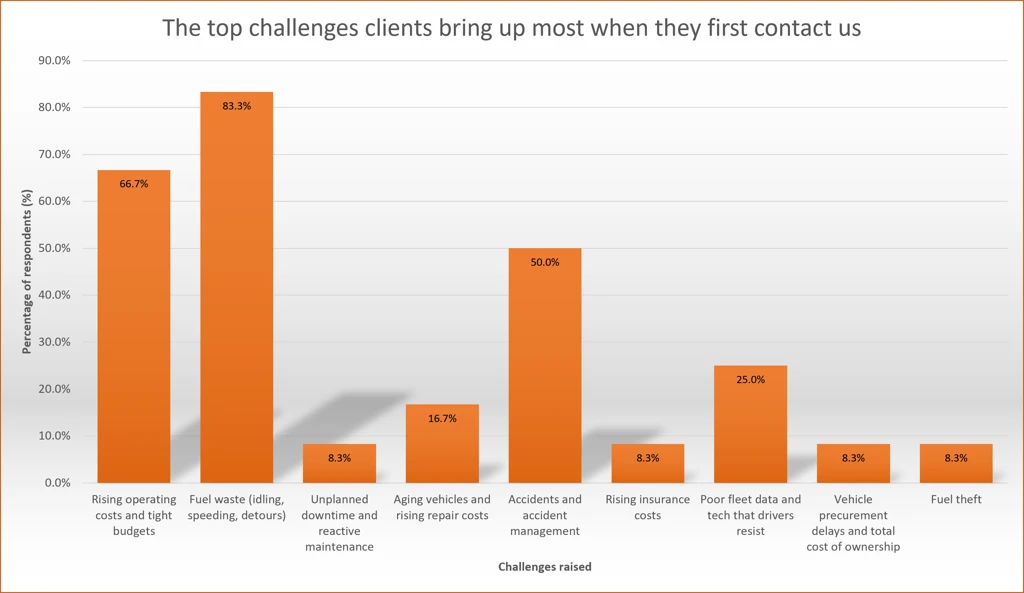
According to our fleet consultants, the top ten biggest fleet costs and headaches are:
Starting with the biggest headache, and it probably doesn’t come as a surprise, is the cost of fuel. 10 out of 12 people (83%) put fuel waste in the top three most stressful expenses. Fuel has always been an issue when it comes to running a fleet, but with fuel prices reaching levels they’ve never reached before across the world, this is becoming more of a concern to fleet managers.
Managers usually call in and ask our agents to give them solutions that help them track exactly how fuel is drained from tanks. After partnering with us, most fleet managers discover that a lot of the fuel loss is attributed to constant driver idling, detours, and vehicle misuse. One of our respondents said that after implementing our fleet solutions, they found R160 000 worth of mismanaged fuel spending.
67% (8/12) of fleet consultants rated the uncontrollable rise in costs, driven by inflation, as one of their top three headaches. Expenses keep going up, but the money available doesn’t. Fleet managers are constantly seeking cost-effective ways to run their fleet and solutions that break down each expense in detail.
Coming in third place, with a 50% rating (6/12), is the cost of accidents and the stress of managing the aftermath. Road accidents often result in driver injuries, which may require hospitalisation. This leads to staff shortages and downtime. If there were other people who were hurt by the accident, your company could face lawsuits, which could also damage the company’s reputation.
According to research by NETS, work-related accidents cost an employer about $55,772 on average, including liability, vehicle damage and lost work. So when managers call in, they ask for solutions that’ll help them prevent accidents by managing driver behaviour. This requires specialised technology that’ll give them insight into the common mistakes that drivers make when behind the wheel.
25% of the 12 fleet agents said fleet managers aren’t satisfied with the technology they already have, as it isn’t giving them enough data. When they call Cartrack, they want something that’ll provide detailed insight to understand what goes on daily. Additionally, most of their drivers resist the technology they have available, so they want something user-friendly and easy to implement so that it can win over drivers.
Ageing vehicles and rising repair costs rank 5th in our survey, with 17% of people putting it in their top three fleet headaches. Vehicle parts such as the engine, suspension, and tyres wear out with age and distance. Fixing these parts isn’t a hassle when the vehicle is still new because most new vehicles have a warranty and are under service plans.
Once the vehicles are out of the service plan, then every worn-out part must come out of the company budget. As the years go by, this amounts to a lot of money. Another thing to note is that worn-out parts also increase fuel consumption, adding to the costs.
A lot of fleet managers wait for vehicles to break down before fixing vehicle components. This is called reactive maintenance. Being a reactive fleet manager leads to costly emergency repairs and vehicle shortages, which lead to more downtime. They need technology that can predict vehicle component failures and help with other vehicle upkeep tasks like service reminders.
With more accidents comes the rising cost of insurance premiums. No matter the size of your fleet, the high insurance premiums will put a significant dent in your budget. According to Business Day, fleet insurance costs are influenced by high fuel prices. Imports are getting more expensive, and repairs cost more due to higher transportation costs in the supply chain. For this reason, fleet managers are looking for ways to reduce insurance costs using telematics.
It’s very important that drivers are happy within a company and remain motivated. When drivers are unsatisfied with how you run your fleet, they’ll seek employment elsewhere. A lot of fleet managers complain about their company turnover rates. They look for solutions to improve driver training and to keep them motivated.
Another obstacle that managers face is the cost of getting new vehicles. A lot of the time, fleet managers only get new vehicles when the old ones are beyond repair instead of planning for the replacement ahead of time. Waiting for a new vehicle costs money, orders get stuck, and while you wait, you might need to hire vehicles to keep operations running.
Additionally, choosing the right vehicle for your fleet operations is also costly, and sometimes there’s no time to make a thorough comparison. Making a purchase only based on price may cost you more later. For example, a cheaper vehicle may use more fuel, resulting in higher running costs.
This is why it’s important to look at the Total Cost of Ownership (TCO) before making a purchase. Fleet managers usually call in to find out if our system can help them with things like vehicle usage analytics to guide their decisions.
Compliance and changing regulations are another factor that drives up fleet costs. For example, this year, the Transport Department implemented the new AARTO law, where drivers get demerit points based on their poor driving habits, and companies face penalisation for using vehicles that aren’t roadworthy.
If there are more vehicles on the road with faulty components and drivers who need more training, your business could be shut down by authorities. So when customers call in, they want a solution that can help reduce risky driving behaviours, so they avoid getting penalised.
To cut costs, save time, and make more informed decisions, you must run a fleet cost analysis of both running and fixed costs. But to get accurate numbers of your fleet costs, you’ll need a fleet management system. This will help you understand your fleet better and make more informed decisions.
Here’s what we mean:
To get a good estimate of how much your fleet costs, you can first start by separating the fixed costs from the running costs. Fixed costs are things that the company must pay for even if the vehicle stays parked. They include things like insurance, finance repayments, and licence renewals.
Running costs, on the other hand, are the costs incurred the more your vehicles are on the road. They include things like fuel and repairs. From there, you’ll add both costs together to get the total amount a vehicle costs you per year.
The second step of your cost analysis involves the amount of kilometres each vehicle travels annually. So if the fixed costs and running costs for one vehicle amount to 100 000, and the vehicle averages 20 000 km annually. Your cost per km for that vehicle is R5.00.
Each vehicle’s cost per kilometre should give you insight into which vehicles cost you more for the same job, helping you make better decisions for your next purchase.
With fleet management software, you get more insight into the metrics that increase your expenses. It helps you:
This also helps you with drawing up an accurate cost analysis.

With Cartrack, you can tailor our solutions to your business needs, so they can address every single cost issue you face within your fleet. From fuel to maintenance, we’ve got all the tools you need to reduce your overall expenses.
Over the years, we’ve dedicated a lot of our time to understanding the needs of fleets in various industries. This has helped us further develop our products and services to suit every business with a fleet.
Some of our top offerings for cost efficiency:
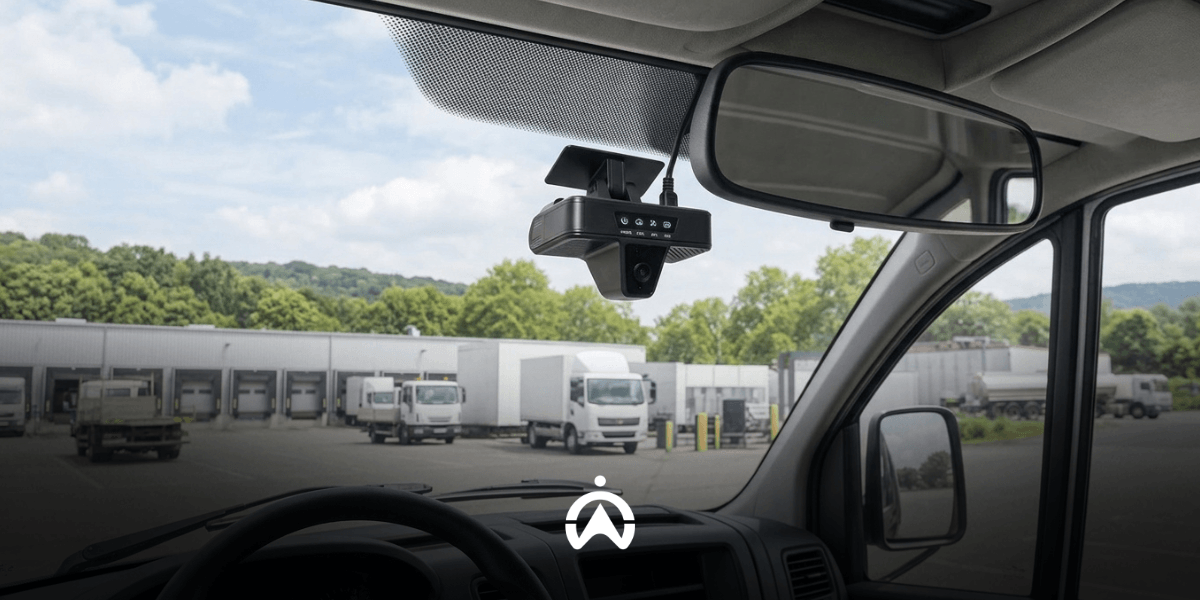
Our GPS telematics devices ensure that you always know where your drivers are and what routes they took and where they stopped. You can check live locations in real time, or you can play back past trips. Through this, you can see when drivers deviate and make detours, which add to the distance and fuel consumption.
“A client's driver stole fuel out of a yellow metal TLB, but our camera helped pick this up.” This is one of the comments that we got from our survey when we asked how our solutions have helped. We’ve got a range of cameras that you can choose from for both inside and outside your vehicles.
You can set reminders on our platform for the service-recommended maintenance dates. For example, if a vehicle is supposed to go in for servicing every 15,000 kilometres, you can set up the reminder on our platform.
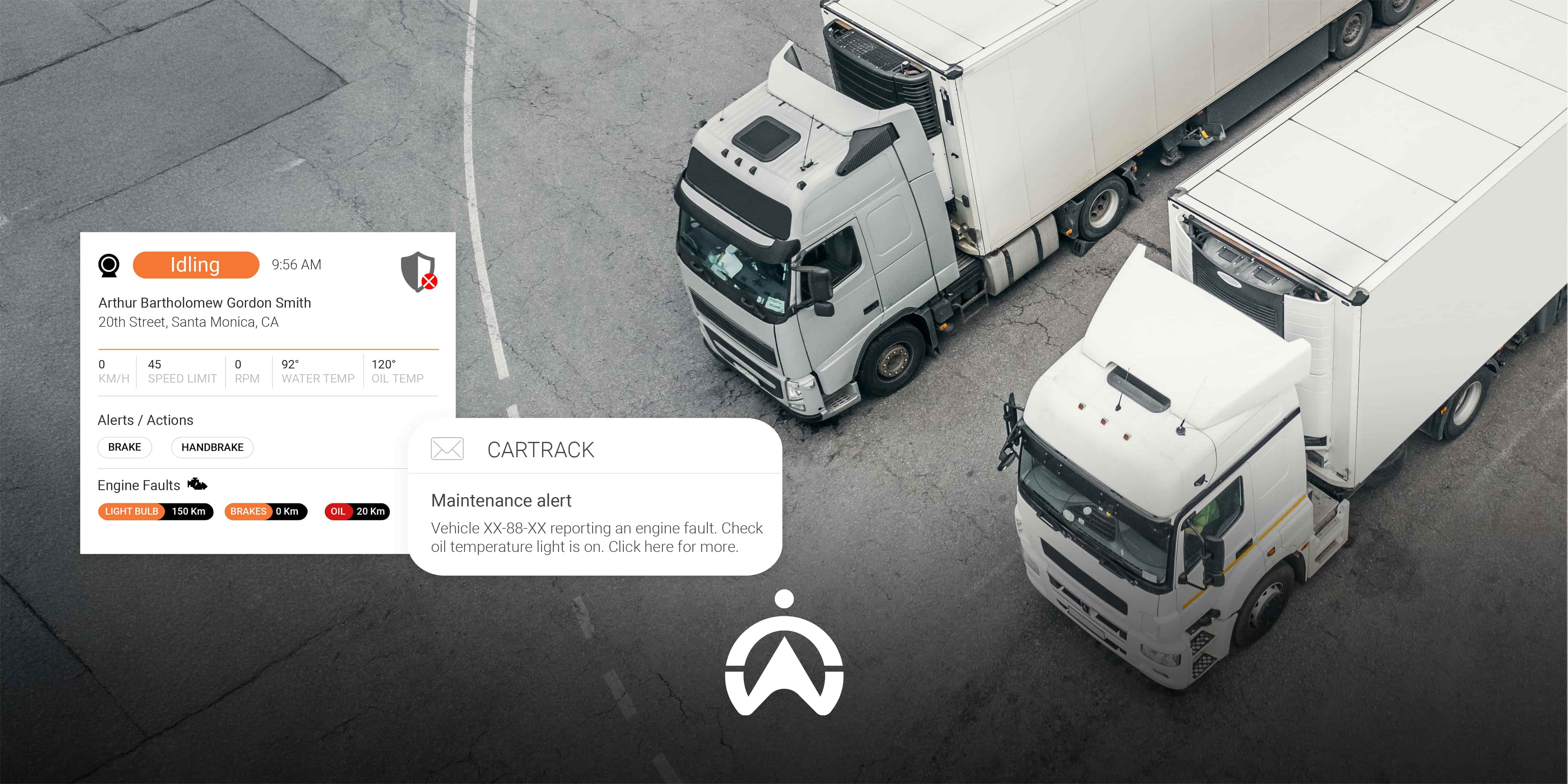
Through the power of telematics, our system reads vehicle mileage. So once your vehicle is close to the next 15,000 km, you’ll get an alert so you can schedule accordingly. This helps you avoid costly surprise breakdowns and downtime.
We can also give you predictive maintenance analytics which warn you to take vehicles in for repair before they worsen. How does it work? Through CAN Bus technology, our system picks up internal issues like worn-out brake pads and then automatically alerts you so you can order new ones well in advance, helping you avoid the cost of an emergency breakdown.
Lastly, you’ll get a table overview of the status of each repair on our platform to see which repairs are delayed, follow up on the cause of the delay, and make necessary arrangements.
To address the top concern for most fleet managers (fuel), we have a multi-layed fuel management system. Our fuel management system consists of solutions like:
Reach out to us to find out more about our solutions and see how else we can help you cut costs. You’ll see the difference within just a few weeks.
Our fleet management survey ranks the 10 biggest headaches and what they cost, from fuel waste to rising costs. See the results and how to cut them.