Digital twins are truly boosting your fleet management by offering the best in simulative, virtual technology that helps improve your business overall. It goes a step beyond telematics, offering even deeper analyses and insights into each of your fleet vehicles. Better insights = more informed business decisions and bigger cuts on business expenses!
As of early 2026, we’ve seen a powerful infiltration of digital twin technology in logistics. A recent global analysis shows that 92% of organisations using digital twins are seeing an impressive return on investment (ROI) exceeding 10%. Over half of these users are seeing an increase of at least 20% thanks to enhanced asset performance.
Elevate your fleet with revolutionary technology and maintain your edge over the competition. Keep reading this blog to understand digital twin technology, explore the pros & cons, and discover how Cartrack can help you move towards a more innovative future for your fleet.
Digital twins are improving operational processes and helping you save money when it comes to your fleet management. When you implement this kind of technology, you’re staying competitive and looking towards the future of ingenuity. These technologies allow you to look forward and predict certain issues, improve workflows, and collect enough intricate data for you to confidently make business changes.
Digital twin technology is a detailed, constantly updated virtual replica of something that exists in real life. This could be an object, environment, or process. It doesn’t matter how intricate or complex the systems are; digital twins can manage them from a minuscule level to a process in its entirety.
Digital twins reflect live behaviours and leverage AI, sensors, collected data, and interactive tools to forecast future performance.
In the case of fleet management, each of your fleet vehicles has its unique virtual counterpart, driven by IoT data transmitted from the actual vehicle. The twin analyses this data against:
to predict the health of components and test potential changes.
Digital twin technology is so important because of its impact and growth that propel creative innovation. It’s looking as though this kind of technology is about to soar in popularity, as businesses want to comfortably make changes and see predictive outcomes without facing serious risk.
Looking at this from a fleet management perspective, potential failures in your fleet can be predicted before they happen, and new software, hardware, or any other update can be tested in simulation first.
💡 Think of it this way:
You know how pilots test their flight and safety skills in a simulation before actually flying a plane? Digital twins are the same thing, but for your fleet. In a flight simulation, pilots test out emergency situations, what flying might be like in different instances & weather conditions, and take-off or landing procedures.
With digital twins in fleet management, you’re predicting downtime and maintenance, testing changes in things like routes and schedules, and monitoring operations for optimisation. This highlights the major benefits of digital twins: allowing you to test changes before implementation and making more accurate predictions.
Digital twin technology is used for:
and so much more.
It can really open the door for strategic enhancement, encourage positive & predictive change, and cut down on the costly mistake of trying something out in the real world.
Some of the industries that benefit from this technology include:
The types of digital twins are:
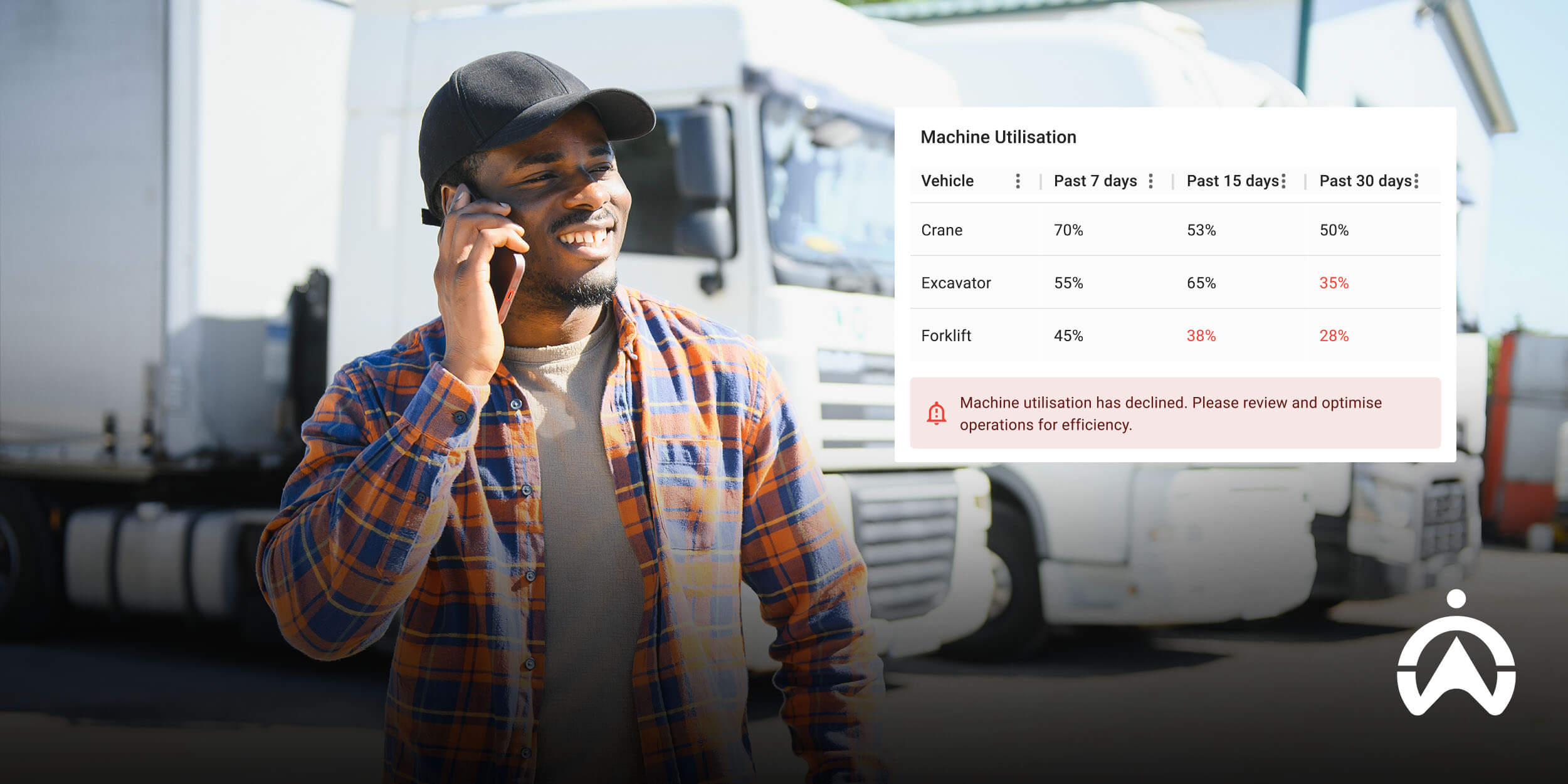
Yes, digital twins are actually useful. Telematics is an already powerful system that provides crucial information and vehicle diagnostics. Digital twins take it a step further by adding an extra, even deeper layer of monitoring and proactiveness. Real-time hypothetical and “what-if” situations can comfortably be played out without worrying about potential risks.
If we look at it in simple terms, fleet management insights operate more like a dashboard, showing you what’s happening right now (with the ability to access past information). Digital twins have more of a focus on a simulation that communicates what will happen, making it easier for you to test a change before actually applying it in real life.
Some of the pain points that digital twins resolve include slow & congested operational processes, poorly planned routes & schedules, and inadequate services or products. Thanks to the in-depth data collection & predictive insights, combined with AI and IoT, there’s room for growth, development, and change.
These are some of the tangible benefits:
By implementing this technology, you can run simulations to check whether any changes you want to make could work in the real world. You can also check for general defects in a product or service you provide, because sometimes there are issues you might overlook when examining it yourself.
This is a great opportunity to use the data provided to improve your business operations.
You can optimise facets of your business, like schedules or routes. Digital twins give you a complete & total overview of your assets, and the information collected from IoT devices will reflect how the parts of your vehicles are working. Because of this, you can immediately see when there’s an issue and address it immediately, or take advantage of the predictive maintenance.
You don’t have to deal with the fallout once the costly breakdown has happened.
Because you’ve tested and run the product/service through simulation, you know what’s working and what could work. The consistent data means you can take a proactive approach and not allow yourself to be disappointed by potential failures in the real world.
The evident successes of digital twins will bring about happier, more loyal customers, boosting your business reputation. Optimised processes and improved performances mean customers get the best in the services they receive.
As mentioned earlier, digital twins make it far easier for your business to anticipate potential breakdowns and necessary servicing. You can be far better prepared so that you handle mishaps quickly or even steer clear of them entirely.
Yes, there are some downsides to using digital twins in fleet management. While the upsides prove to be of massive value to your business, it’s still important to understand that factors like data overload, security concerns, and technical complexity can make this technology daunting.
Consider these challenges:
For this technology to work optimally, consistent, high-quality, and complex data is needed at all times. That information is also coming from so many sources at any given time, which adds to its complexity. Being inundated with this level of data can be quite overwhelming, and if you don’t have fleet software that’s organised, this can make data collection a difficult and fragmented process.
Combatting this means ensuring cohesion (i.e., having a comprehensive fleet management platform) and an integration-friendly platform that’ll accommodate this technology.
When you're dealing with this much operational data, the topic of sensitivity and security is a major concern. In situations where that data includes people’s personal information, there’s even more pressure to ensure safety policies are fulfilled. Collected information should always be protected and handled with complete care, especially according to industry standards.
Specialised engineers and professionals are required for the building and maintenance of digital twins. From data analysis & synthesising to rendering and continuous software development, specialised expertise is clearly necessary. Above this, it also means that staff members would need to be trained on this technology and the data management that comes with it.
The best way to tackle this is to team up with a technology company that would provide the best services and support for an implementation of this magnitude.
You must ensure that you’re confident and stable enough to continually invest in the technology. The more your business grows, the bigger the data and complexity demands will become. Ensure that you have strong strategies and systems in place that will allow that growth to happen smoothly.

Yes, Cartrack does support digital twin integration. We use an API-first approach (making us integration-friendly), although we won’t build the digital twin itself. Cartrack’s API integrations allow you to seamlessly connect to other systems, making it a perfect solution for your fleet management transformation.
What digital twins need is powerful telematics, a consistent stream of vehicle data & diagnostics, and smooth integration. Cartrack meets all those needs, providing the real-time flow of data that’s required while supporting fleet improvement through its SaaS platform. All of Cartrack’s tracking units are IoT devices that are integrated into your vehicle telematics. We can be the perfect source for your twin technology groundwork.
It’s important to note that we’re not a digital twin platform; we’re a twin-ready infrastructure designed to support your fleet management growth and evolution. We recognise the importance of embracing future-forward technologies like these twins, and that’s why we’re prepared to be your long-term partner for steady growth and reliable, accurate data.
Fleet data is the backbone of positive change and business growth, and that’s why adopting digital twin technology is the key to even bigger growth. While a giant step forward for your business, you also need a dedicated and supportive partner that’ll provide the necessary framework to keep the twins running.
We have your back. Alongside the required data and insights, we’re also locally focused and available 24/7, 365. You’ll get everything you need to push your smarter decisions and technological growth forward.
With Cartrack, you have the solid foundation to explore advanced innovations like digital twins to keep you prepared for what’s next. Speak to one of our professionals and turn your fleet data into insightful business decisions today!

Discover how digital twin technology is transforming fleet management. Learn how real-time virtual modelling raises efficiency and cuts costs today.