To pass fleet safety audits every time, you’ve got to take every step to ensure compliance from day one. And while this might seem daunting or even impossible, it’s all made simple with the help of technologies like GPS tracking, telematics, and automation. Simply put: investing in a holistic fleet management system is the proactive approach that keeps your fleet audit-ready.
Embrace the future by moving away from manual processes and choosing simplicity. Automation is what keeps your business running optimally, gives you a competitive edge and keeps you away from fines or halted operations.
Don’t let your business suffer unnecessary consequences. Keep reading to understand why safety audits are important for your fleet and how Cartrack can help you pass every single audit, every time.
To guarantee compliance on every fleet safety audit, practice compliance from the very start of your business operations. When you’re compliant from the start, it shows you’re genuinely concerned about the safety of your business and its people, never downplaying its importance. You’re ensuring daily inspections are being done, verifications are in order, and documents are digitised.
Building a solid safety culture is the backbone of smooth and uncomplicated operations, especially when it comes to fleet management. It’s a reflection of your sincere commitment to the wellbeing of your team and drivers.
A fleet safety audit is a review process that assesses a business’ overall safety, looking at safety practices & policies, procedures, and day-to-day operations.
This is a crucial part of how a business runs because it ensures that everyone (and all processes) in the business are safe and protected, while encouraging change if there’s space for corrective measures.
When a fleet safety audit is carried out, the following are typically reviewed:

Fleet safety audits typically fail because of poor recordkeeping; that’s what it boils down to. When your recordkeeping is poor, you likely don’t have your maintenance logs in check, licences up to date, or driver qualifications in order. When your documents aren’t in order, you’re immediately non-compliant.
Safety audits also fail when the necessary documents aren’t easily accessible. Everything needs to be in order and readily available for the external inspectors.
Finally, if your safety protocols and policies aren’t up to industry standards, this could negatively impact your audit outcome.
We know how counterintuitive this sounds, but believe it or not, being prepared is actually the wrong strategy. If you’re rushing to prepare & ensure that everything is there and in order before an audit, this points towards being non-compliant in your day-to-day operations. You’re better off being compliant from the start, and you can achieve this with the right tools.
The traditional approach usually mirrors cramming for an exam. The auditor comes by, and you’re rushing to get everything in line; trying to find the right documents, spreadsheets and logs. This presents the audit as the problem when it's in fact the lack of compliance that’ll catch you out!
Much like anything in fleet management, it’s important to take a proactive approach to everything fleet safety-related. Telematics and automation are at the core of compliance from day one. These features help digitise your world of compliance, keeping everything organised and safely located in one electronic space.
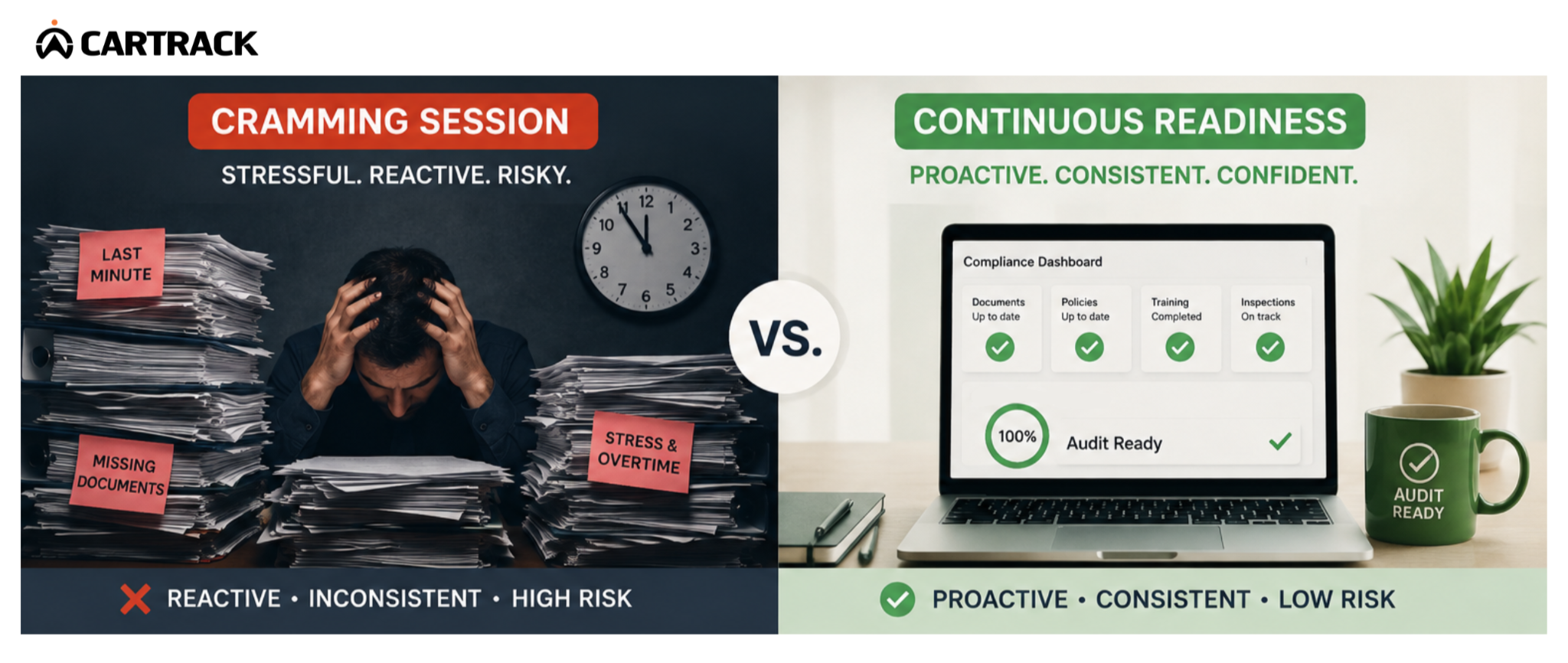
💡 REMEMBER: Audit readiness shouldn’t be a ‘cramming session’ that happens every year, but rather, it should be continuous readiness and a normal outcome of your daily operations.
Another hack to remain audit-ready is to carry out internal safety audits and ensure you’re observing the best practices to maximise safety. Some aspects don’t need to be reviewed as often as others, so try to break down your internal auditing into specific timeframes. This way, you can monitor any safety concerns while ensuring nothing slips through the cracks.
Here’s a guide to what you should be checking and how often things should be checked:
Set up a daily pre- and post-trip inspection checklist, otherwise known as a DVIR (Driver Vehicle Inspection Report).
Allow your drivers to submit their DVIRs so that there’s a record of your fleet’s inspection history, and check that there aren’t discrepancies between your entries and the telematics data. This shows that you and your drivers are prepared to identify and resolve the small issues before they become big, non-compliance issues.
Drivers should also ensure trips are recorded in the logbook daily, not only for tax purposes but also as a confirmation of compliance with driver fitness and hours of service/working hours.
These are the high-risk safety areas that require regular internal reviewing, which is largely centred on driver behaviour monitoring. The Occupational Health and Safety Act (OHSA) strictly enforces a zero-tolerance policy on drugs and alcohol, which encourages routine testing from fleet businesses.
Driver behaviour and safety adherences are other critical points. Drivers must be behaving responsibly while on the roads for their own safety and the safety of other road users.
Much like Cartrack’s driver monitoring systems, records must show clear evidence of offences, then coaching (to remedy those violations), and improvements in ratings on their driver scorecards. Responsible drivers are compliant drivers.
Quarterly reviews are usually reserved for maintenance, registration, and contracts. This allows you to take a step back and assess the areas that could quickly become a headache if they’re not reviewed as often as they should be.
Look over registration papers, licences, and driver files to ensure they’re up to date and match the records as they appear on the fleet platform. If you have contracts with vendors or contractors, check that their safety standards match the ones you’ve set for your business too.
Also audit maintenance logs and check that scheduled maintenance is going according to plan so that the health of your fleet is preserved and compliance is met.
This is for policy and procedure reviews. You should take time to look over your company safety handbooks as well as protocols. Carefully review things like incident reporting procedures, driver training programmes, post-breakdown & downtime protocols, and standard regulatory requirements.
Regularly assessing existing procedures helps you identify potential holes in existing policies, allowing you to implement data-led change if necessary. It also allows you to amend your policies according to updated industry safety standards.
This is the suggested timeframe for fully-fledged, overall safety audits. This should serve as time for you to do a complete safety overhaul, looking at every area from safety meetings and communication to vehicle conditions and preventative maintenance schedules.
During this comprehensive safety inspection, score every single area. Much like an exam past paper, you can use external safety auditing scorecards, risk profiles or outside results as a comparative checklist to run your internal mock audit.
Following this, identify the most high-risk, non-compliant areas and dedicate your resources to improving those areas.
Ensuring that everything is in order post-incident is exceedingly necessary. A post-incident audit must be treated as its own, separate audit and must happen whether you’re actively being audited externally or not.
Collect all the data from telematics and video footage to reconstruct an incident so you have all the data and are working from a standpoint of objectivity. This information will also allow for a core analysis, helping you quickly get to the bottom of things.
Following this, you can implement and document the necessary post-incident measures. You can speed up claims and insurance paperwork, jump onto vehicle repairs, and take whatever corrective steps are necessary with the driver. This will show auditors that you’re proactive about risk management.
Remember, safety strategies aren’t static. It’s important that your fleet safety management strategies continuously improve. Most importantly, when you receive regulatory feedback from those audit checks, learn from those reported violations and implement corrective measures.
Remember to set clear goals for these internal audits. What’s the scope? Are you trying to see how effective your safety protocols are? Are you looking to find the cracks in your inspection checklist? Are you putting a magnifying glass on your inspection history? These questions will ensure that everything is properly addressed.
Also ensure that your documentation & reporting are always clear and concise. Clear records help you identify areas of improvement but also keep information communicable, especially for external auditors and stakeholders. This point links directly to the importance of a comprehensive fleet system that helps you with automated, consolidated reporting.

Cartrack helps you achieve audit readiness by offering some of the best solutions in end-to-end SaaS (software as a service). We’ve spoken about the importance of GPS tracking, telematics, automation, AI and other key technologies when it comes to keeping your fleet saf— and we’ve got it ALL!
Instead of worrying about manual processes and lost physical papers, we provide you with the tools to achieve simplicity, safety and compliance every day.
It’s one thing to speak about how Cartrack can help you achieve perpetual fleet safety readiness. It’s another thing to hear a positive testimonial from one of the country’s biggest logistics groups confirming it.
Take a look at this:
Diraro Group is one of the leading transport companies for the mining industry. The business has a massive, heavy-duty fleet of 70 trucks moving 250 000 mt of raw materials per month from inland mines to coastal ports.
It’s a complex, heavily regulated fleet that’s rigorous about safety. There’s no room for paper-based mistakes or missing information, especially as a company in an industry controlled by strict axle limits, obligatory safety accreditations, and other stringent rules.
Not meeting compliance can mean HEAVY fines and grounded trucks.
Here’s how Cartrack improves Diraro’s fleet safety and keeps them audit-ready:
If we can demonstrate support and a solid safety partnership with a high-volume fleet like Diraro, then we can support YOUR fleet too! See the full Diraro testimony 👉 here.
With that being said, let’s break down our safety offerings.
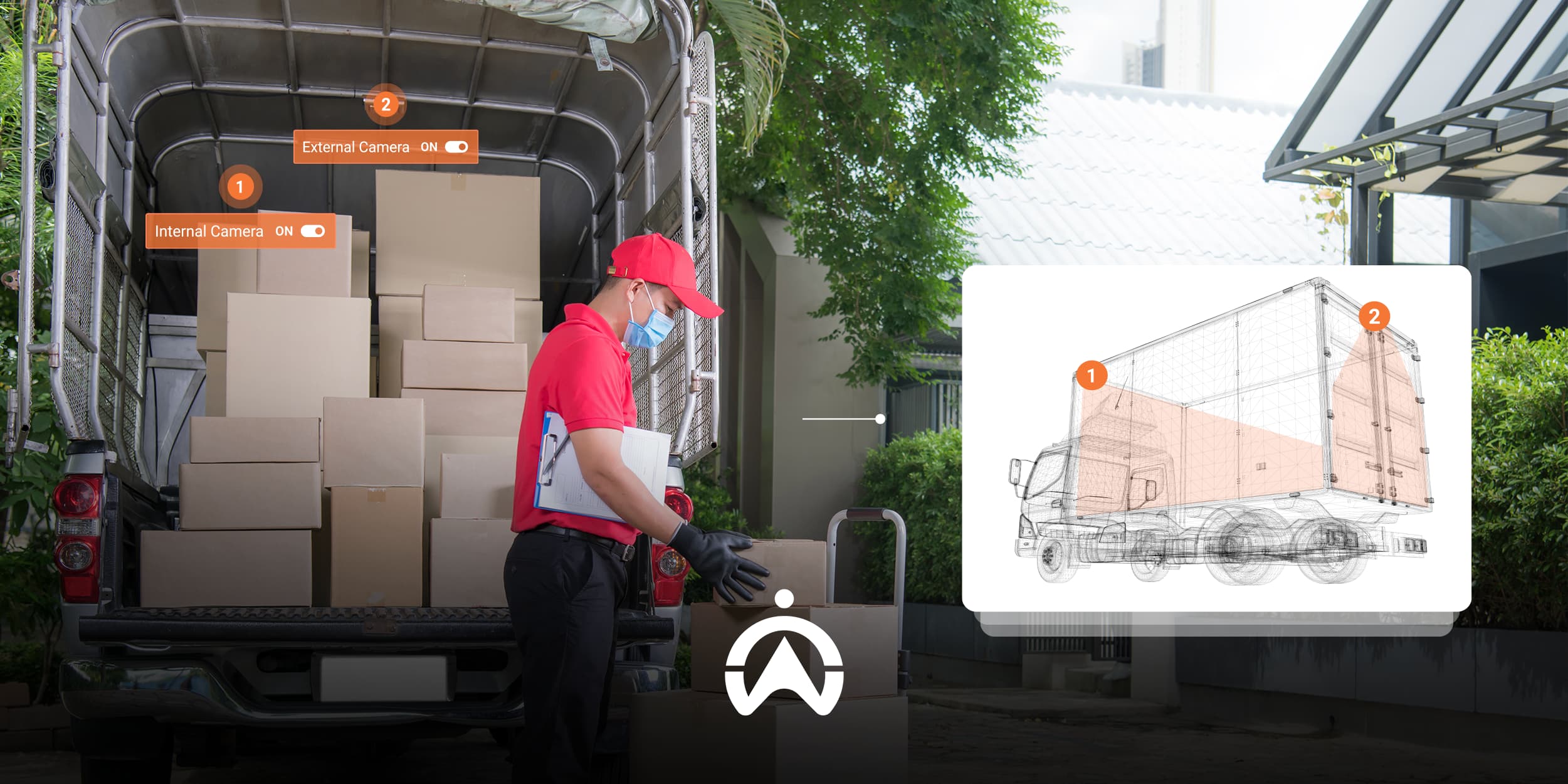
Cartrack offers advanced, AI-powered camera solutions that record driver violations in real time, audibly alerting drivers to their events so they can correct their mistakes. These include cellphone use, smoking, fatigued or distracted driving, speeding and more.
Depending on your camera solution, you can also communicate with your drivers via the in-cabin calling option.
We also have the driver scorecard feature, which reports and rates drivers according to how well or poorly they’re driving. If drivers are exhibiting poor behaviours on the road, you can use the recorded footage to coach them and enhance on-road safety in your business. It can also be a positive and encouraging way to promote and reward safer driving in your fleet.
We have a whole tab on FleetWeb dedicated to reports, where you can quickly export anything from maintenance and CO₂ emissions to risk management reports. FleetWeb has completely revolutionised and simplified the admin process, making important reports immediately available to auditors and third-party inspectors.
You can filter your reports according to operator, date, status, and other factors. You can also ace fleet compliance with timely reminders & alerts for things like licence renewals, insurance, road tax, tyre rotations, and other fleet tasks. This ensures proper maintenance and adherence to industry standards.
You can also digitalise your compliance, admin, and reporting. As previously mentioned, drivers can complete and submit their DVIRs digitally. Manage your compliance far more efficiently by customising your dashboard and viewing everything in one place with all the necessary reports, updates, and data.
Achieve complete security and compliance via real-time tracking, as well as the use of driver tags (DiD Tags) to ensure that the right drivers are using the right vehicles at the right times. This minimises unauthorised use and creates an authentic digital trail of drivers.
Our stolen vehicle recovery (SVR) services also help you minimise risk by quickly recovering your assets, protecting you against expensive losses and potential insurance non-compliance. Tackle those security gaps BEFORE they impact your audit scores.
Create a safety-first culture with Cartrack. Speak to one of our knowledgeable professionals today and equip your fleet with our AI-powered safety ecosystem!

Pass every inspection with zero surprises. Learn strategies to prepare your vehicles, organise documentation, and ace fleet safety audits every time.